Relationships Are Systems — What Engineering Taught Me About Partnership
For ten years I had a single obsession: how do the best engineers produce so much more than everyone else?
The answer was never raw hours. It was leverage — the value produced per unit of time invested. The best engineers found the activities that compounded and poured themselves there. They shortened feedback loops so they learned faster. They built systems instead of relying on willpower. They treated their own effectiveness as something you could measure, debug, and improve.
The moment I understood leverage, I was devoted to it. Not just at work — everywhere. I couldn’t unsee it. I pointed it at my health, my money, my time, my attention. If a part of my life mattered, I wanted to bring this lens to it. And nothing mattered more to me than the person I spent every day with in my intimate partnership.
There’s a long road between believing something is the most important part of your life and actually committing to being intimate with and deeply understanding everything there.
Conviction is cheap. Commitment is the hard part.
Here’s what I’ve learned about a leverage mindset: it’s easy to apply where the stakes are low and the feedback is clean. A deployment pipeline doesn’t snap at you when you try to optimize or change it. A team’s velocity chart doesn’t get hurt when you name the bottleneck.
But my marriage? My desire? The recurring argument that ran on a loop every few weeks like a failing job I kept restarting instead of fixing? The stakes there were emotional, and the feedback came back as hurt. I knew — I knew — these were systems. I believed it completely. I could have recited the whole framework over dinner. Inputs, feedback, leverage points, the works.
Knowing it and living it are different things. To actually treat partnership as what it was — the highest-leverage system for my joy and fulfillment in life — I’d have to do the thing the framework demanded: shorten the loop on the conversations I most wanted to avoid. Point the precision at places where I braced and resisted what I felt. Change the conditions instead of asking us both to try harder.
That took years. Not because I doubted the lens. Because committing to it where it mattered most meant I’d have to grow — and that’s a different order of difficulty than refactoring code.
What partnership has in common with good engineering
Once I committed for real, the parallels were almost funny.
Feedback loops. In a healthy codebase, you want to find out something’s broken in seconds, not months. Most couples run on feedback loops measured in years — resentment compounding silently until it ships as a crisis. The skill isn’t avoiding rupture. It’s shortening the loop: making contact with what’s true between you while it’s still small enough to work with.
Leverage. Couples pour enormous effort into low-leverage activities — relitigating logistics, managing each other’s moods, optimizing the calendar. Meanwhile the highest-leverage activity, the one that changes everything downstream, goes untouched: actually meeting each other vulnerably in what’s true. One honest hour outperforms a hundred careful ones.
Systems over willpower. Every engineer learns that you don’t fix reliability by asking people to try harder. You change the system. Intimacy is the same. “Just communicate better” is the relationship equivalent of “just write fewer bugs.” Useless as advice. What works is changing the conditions — the safety, the structure, the container — so that the behavior you want becomes the natural output.
Iteration. This was the one that undid me. Sex, conflict, repair — these are the most rapidly iterable systems in human relationships. They happen often. They give immediate, unmistakable feedback. And when you stop performing them and start actually studying them, they teach you about yourself faster than any other practice I’ve found.
And here’s what surprised me most: it doesn’t stay contained to the couple. The same lens reaches into all of it — how I father my daughter, how I let myself be emotionally known, how alive or shut down I am sexually, whether I can stay present at a dinner table instead of optimizing it. These aren’t separate domains. They’re one system, and partnership is the room where you can actually see it running. We spend our sharpest years convinced fulfillment is something a career delivers. Mine was waiting in the parts of life I’d never thought to engineer — the ones that turned out to hold almost all of the meaning.
Where the metaphor breaks — and why that’s the point
I want to be honest: the systems lens gets you in the door, and then it stops being enough.
Because the thing you find when you actually treat partnership as a system isn’t a cleaner set of metrics. It’s you. Every place you resist life. Every desire you’ve buried because you decided it was too much. Every old strategy for staying safe that’s quietly running your life like legacy code nobody dares to delete.
You can’t optimize your way through that. There’s no clever refactor. At some point the engineering gives you the courage to look, and then a deeper devotion has to kick in — one that goes further than engineering alone: presence, and the willingness to stay even when every instinct says to leave.
That’s the part I couldn’t have predicted from where I started. The precision was never the destination. It was the thing that finally let me stop managing my life and start actually living inside it.
What I’m doing now
I left tech to build this. It’s called Co·Awaken — a school for people who sense that their relationship isn’t a thing to maintain but a path to walk. We work with couples and individuals on the whole system: emotional and sexual intimacy, partnership, family, fatherhood and motherhood — the parts of life where, it turns out, most of the fulfillment actually lives.
If you’ve read this far, you’re probably wired the way I am — you can’t help seeing the structure underneath things. The only question is whether you’ve given that instinct to the part of your life that matters most, or whether you’ve been meaning to.
If you want the longer version of how an engineer ended up here, start with this. It’s the piece I’d hand my younger self.
The most interesting systems are the ones nobody thinks to study. I believed in this one for years before I gave it everything. Don’t wait as long as I did.
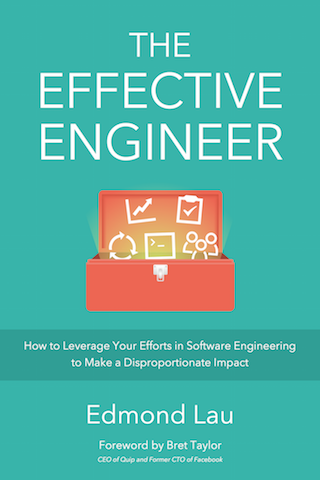
“A comprehensive tour of our industry’s collective wisdom written with clarity.”
— Jack Heart, Engineering Manager at Asana
“Edmond managed to distill his decade of engineering experience into crystal-clear best practices.”
— Daniel Peng, Senior Staff Engineer at Google
“A comprehensive tour of our industry’s collective wisdom written with clarity.”
— Jack Heart, Engineering Manager at Asana
“Edmond managed to distill his decade of engineering experience into crystal-clear best practices.”
— Daniel Peng, Senior Staff Engineer at Google
Grow Your Skills Beyond the Book
Listen to podcast interviews with top software engineers and watch master-level videos of techniques previously taught only in workshops and seminars.